






Marine Internet & Yacht Internet Systems Using Starlink and 5G
Why Professional Yacht Internet Installation Matters
Yacht internet performance depends heavily on installation and network design. Common problems we correct include poor antenna placement, unnecessary cable splices, inadequate onboard WiFi, and systems that depend on a single WAN source.
These issues can contribute to interrupted remote-desktop sessions, inconsistent speeds, poor WiFi coverage, and outages when an internet source becomes obstructed or unavailable.
One example is the 116-foot Romeo Foxtrot. The owner relied on a single Starlink system and experienced interruptions while using remote desktop applications to connect to her office.
The vessel was upgraded to two Starlink Performance systems, LTE/5G, and an MDS Blender. The multi-WAN system provides additional bandwidth and redundancy and reduces the impact of a temporary interruption on any one internet source.
The upgrade has made remote work aboard the yacht substantially more practical for the owner.
Marine Data Solutions has completed more than 400 Starlink yacht installations. Professional installation includes selecting a location with the clearest practical view of the sky, routing cabling correctly, and integrating Starlink with the vessel’s onboard network.
Where additional redundancy or bandwidth is required, Starlink can also be integrated with LTE/5G, a second Starlink system, or other WAN sources through the MDS Blender.
Actual Starlink speeds vary by location, service plan, network demand, antenna visibility, weather, vessel movement, and onboard network design.
MDS support can extend beyond the hardware installation. Depending on the selected MDS support plan, services can include 24/7/365 phone and remote technical support, Starlink account management, airtime changes, remote network management, and assistance coordinating replacement equipment when required.
This gives yacht owners, captains, ETOs, and engineers a marine-focused support resource for both the Starlink service and its integration with the vessel’s onboard network.
Professional installation and network design reduce many of the problems caused by poor antenna placement, inadequate onboard networking, and single-source internet systems.
Explore real-world pricing and options in our Marine Internet Cost Guide.
Shop current Starlink Performance bundles and hybrid systems here Shop.




Yacht Internet Systems Engineered for Reliability
- Starlink satellite internet
- Marine LTE/5G routers
- External marine antennas
- Managed onboard network infrastructure
- Vessel-wide WiFi coverage
- VLANs and traffic policies
- Multiple WAN sources where additional redundancy is required
Starlink Internet for Yachts
- Higher available bandwidth
- Lower latency
- Lower airtime cost for many common yacht-internet use cases
Learn more about Starlink performance and installation considerations for yachts.
5G and Cellular Internet for Yachts
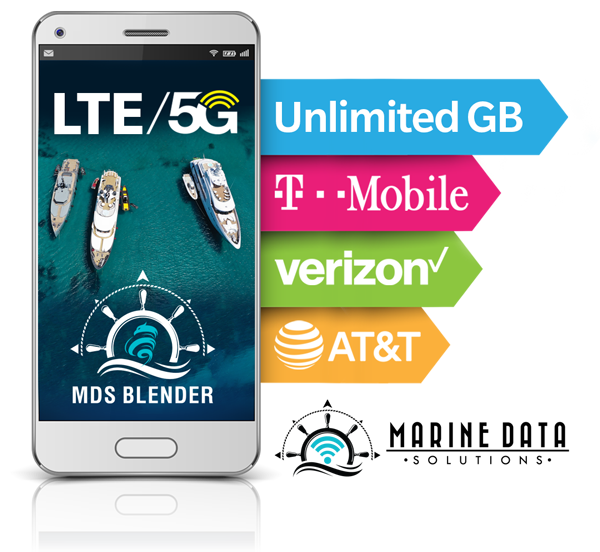
LTE/5G can provide very strong, low-latency internet performance near shore when suitable cellular coverage is available.
Coverage varies by carrier, location, tower density, antenna height, terrain, network demand, and distance from shore, so LTE/5G should be treated as a nearshore WAN source rather than an offshore replacement for satellite internet.
A professional marine cellular system may include:
- Marine LTE/5G router
- External marine antennas
- Appropriate SIM or airtime services
- Integration with Starlink and other WAN sources
- Automatic failover and traffic management
Learn more about cellular internet systems for yachts.
Hybrid Yacht Internet Systems
Hybrid yacht internet systems use more than one WAN source so the vessel is not dependent on a single connection.
Depending on the design, the network can manage Starlink, LTE/5G, marina WiFi, a second Starlink system, Eutelsat OneWeb, VSAT, or other available internet sources.
This architecture can provide:
- Strong nearshore performance when LTE/5G is available
- Satellite internet offshore
- Additional WAN redundancy
- Automatic failover between available sources
- Better control over bandwidth and data usage
Near shore, the vessel may make greater use of LTE/5G. Offshore, satellite internet typically becomes the primary WAN source.
Onboard Network Engineering
The external internet source is only one part of a yacht internet system. The onboard network determines how that bandwidth is distributed throughout the vessel.
Marine Data Solutions designs managed vessel networks that can include:
- Managed switches
- Enterprise routers
- Vessel-wide WiFi access points
- VLAN segmentation
- Bandwidth management
- Owner, crew, operational, and charter-guest networks
- Remote monitoring and network management
Proper network engineering helps prevent poor WiFi coverage, overloaded guest networks, and high-bandwidth applications from interfering with more important vessel traffic.
Primary service regions include:
Florida:
Fort Lauderdale, Miami, Palm Beach, West Palm Beach, Riviera Beach, Jupiter, Stuart, Key Largo, and Key West.
Bahamas:
Nassau, Abaco, Exumas, Eleuthera, and Harbour Island.
Caribbean:
St. Thomas, St. Maarten, Antigua, and the British Virgin Islands.
Marine Data Solutions also provides yacht internet system design, remote network management, Starlink configuration, LTE/5G integration, and MDS Blender support for vessels operating outside our primary South Florida, Bahamas, and Caribbean service regions.
 Yacht Internet Questions
What internet works best for yachts?
For many yachts, the strongest starting point is a hybrid system that combines Starlink for offshore internet with LTE/5G for nearshore use when suitable cellular coverage is available.
Larger or higher-demand yachts may also use a second Starlink system, Eutelsat OneWeb, VSAT, marina WiFi, or other WAN sources when additional redundancy is required.
Is Starlink Good for Boats and Yachts?
Yes. Starlink is widely used on yachts because it can provide high-speed, low-latency satellite internet beyond dependable cellular coverage.
Coverage and performance still depend on the service plan, operating area, antenna visibility, weather, vessel movement, network demand, and onboard network design. Many yachts combine Starlink with LTE/5G or other WAN sources for additional redundancy.
How Fast Is Starlink on a Yacht?
Starlink speed varies by location, network demand, service plan, weather, antenna visibility, vessel movement, and onboard network configuration.
The Starlink Performance Kit (Gen 3) is capable of high-throughput service, but actual yacht speeds should be evaluated under real operating conditions rather than treated as a fixed number.
Can Starlink and LTE/5G Be Combined on a Yacht?
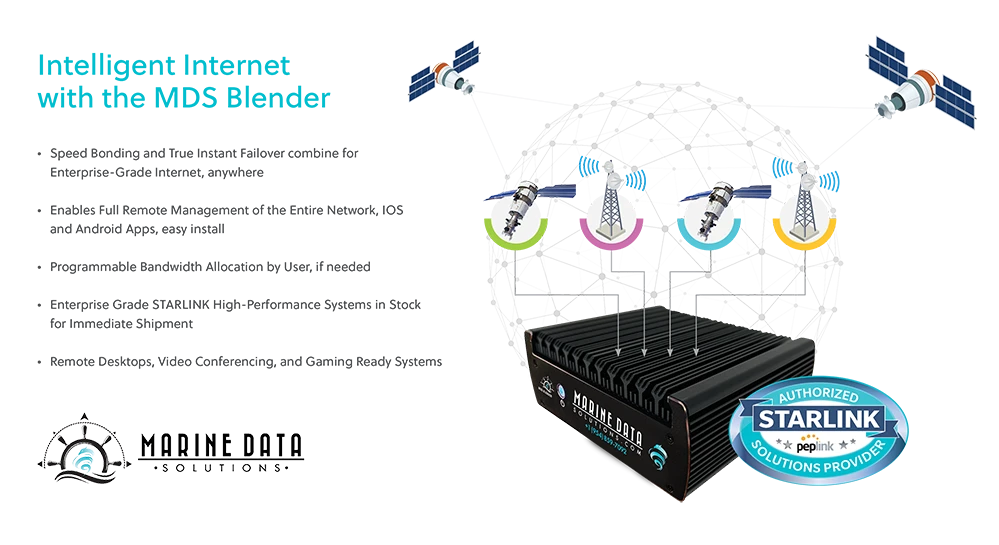
Yes. The MDS Blender can combine Starlink with LTE/5G and other WAN sources in one managed onboard internet system.
Depending on the configuration, the system can provide bandwidth aggregation, automatic failover, traffic management, and session preservation.
What Equipment Is Required for Yacht Internet?
A typical professional yacht internet system may include Starlink, an LTE/5G router, external cellular antennas, managed switches, onboard WiFi access points, and WAN-management equipment.
The exact hardware should be based on the vessel’s cruising profile, number of users, onboard applications, and redundancy requirements.
Does Starlink Work Offshore on Yachts?
Yes, when the vessel has the appropriate Starlink service plan and operates within an authorized service area.
Starlink is commonly used offshore where terrestrial LTE/5G coverage is limited or unavailable.
How Far Offshore Does Internet Work on a Yacht?
There is no fixed offshore distance for LTE/5G. Cellular performance depends on carrier coverage, tower location, antenna height, terrain, vessel position, and network conditions.
Once the vessel moves beyond usable terrestrial coverage, satellite internet becomes the primary WAN source.
How Much Does Yacht Internet Cost?
Cost depends on the hardware, installation, onboard network requirements, support plan, and monthly airtime selected.
Because yacht internet systems range from relatively simple Starlink + LTE/5G installations to multi-WAN systems with multiple satellite sources, there is no single price that applies to every vessel.
Does Starlink Work While the Yacht Is Moving?
Yes. The Starlink Performance Kit (Gen 3) is designed for in-motion operation when used with the appropriate service plan and installed correctly.
Where Should Starlink Be Mounted on a Yacht?
Starlink should be installed where it has the clearest practical view of the sky while also accounting for radar arrays, domes, masts, superstructure, cable routing, drainage, and service access.
Do Yachts Use Both Starlink and LTE/5G?
Yes. Many professional yacht internet systems use Starlink offshore and LTE/5G near shore when suitable cellular coverage is available.
Using multiple WAN sources can improve redundancy and reduce the impact of temporary outages on any single connection.
Why Is My Starlink Slow on My Yacht?
Common causes include antenna obstruction, network congestion, heavy weather, vessel movement, poor cable installation, inadequate onboard WiFi, overloaded access points, or other network-design problems.
A proper diagnosis should evaluate both the Starlink terminal and the complete onboard network before assuming the satellite service itself is the problem.
High Speed Internet with MDS Blender
Yacht Internet Design, Installation & Support
Marine Data Solutions designs, installs, and supports yacht internet systems using Starlink, LTE/5G, onboard WiFi, managed routers, external antennas, remote monitoring, and multi-WAN network management.
Based in Fort Lauderdale inside Safe Harbor Lauderdale Marine Center, MDS supports yachts throughout South Florida, the Bahamas, Caribbean, and international cruising regions.
Systems are designed around the vessel’s cruising profile, number of users, onboard applications, data requirements, and desired level of WAN redundancy.
South Florida Yacht Internet Installation
Marine Data Solutions provides yacht internet installation, Starlink integration, LTE/5G systems, onboard WiFi, MDS Blender systems, and multi-WAN network support throughout Fort Lauderdale, Miami, Palm Beach, Riviera Beach, Stuart, and the broader South Florida yachting market.
Written by Michael Robilio
Michael Robilio is the founder of Marine Data Solutions and Concord Marine Electronics and has been designing and supporting advanced marine electronics and yacht internet systems since 1988.
His areas of expertise include Starlink for yachts, hybrid marine internet architecture, LTE/5G integration, onboard WiFi, vessel networking, marine electronics, AV systems, and yacht automation.
Learn more about Michael Robilio and his marine technology experience.
The information on this page is based on real-world yacht installation experience, manufacturer training, and practical marine network design and support.